 Heartstyles blog
When Leaders stop leading from Fear
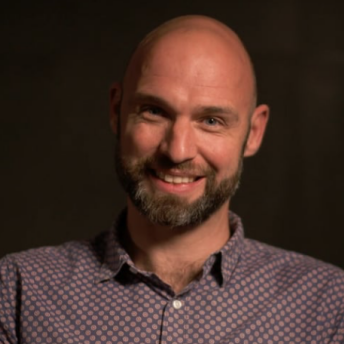
Author
Dr. Marc Rogatschnig – Clinical & Consulting Psychologist

Fear is an integral part of the human story, and a fundamental force that helped our species survive. It prepares our brains and bodies for action, to fight, to flee or sometimes to do nothing at all, and to freeze. In those moments, our physiology shifts gears and prioritises oxygen for our muscles, while adrenaline spikes, our heart begins pumping faster to send oxygenated blood into our muscles. Our survival instinct kicks in, and with a prioritisation for action, our brains become almost exclusively focused on the threat before us. All thinking, judgement and decisions are inextricably tied to this threat.
Fear has many playmates, including uncertainty, ambiguity, worry and anxiety. This fear response is useful when facing immediate danger but in modern organisations, the threats leaders perceive are rarely physical. Instead, they come in many forms and are often carried on the back of news and information such as market uncertainty, economic downturns, shifting strategies or the success of competitors. One of the most powerful triggers of fear in organisations is the perceived threat to job security. Because our livelihoods are tied so closely to our sense of survival, even subtle signals - economic uncertainty, talk of cost-cutting, or comments about difficult times ahead, can activate deep anxiety. The human brain, however, does not distinguish particularly well between a physical threat and a perceived one and as a result, leaders often find themselves operating under the influence of fear and anxiety without fully recognising it.
Fear narrows thinking
The biology of fear has an immediate impact on the quality of our thinking. When the body enters a threat response, the brain’s capacity for complex reasoning diminishes as our thinking becomes faster, simpler and more reactive.
In leadership contexts, decisions can become less about exploring possibilities and more about avoiding risk. Curiosity gives way to certainty as leaders begin protecting positions rather than investigating reality.
Over time, this narrowing of thinking becomes embedded in how teams operate.
Fear changes how people behave
When people are fearful or anxious about the future, their behaviour changes in predictable ways. They become more cautious about challenging senior leaders. They seek approval more frequently before making decisions. They prioritise being liked over being honest, and they often avoid taking risks that might draw attention to themselves.
These behaviours rarely stem from poor intentions. They are simply strategies people use to protect themselves.
Yet collectively they create an environment where innovation declines, constructive disagreement disappears and organisations lose access to the diversity of thinking they need to navigate complexity.
Fear spreads through culture
Fear does not only stay contained within individuals. When large numbers of people operate from anxiety and self-protection, those behaviours can become the norm and define an organisational culture. Leaders play an influential role in this dynamic because they hold influence over careers, resources and opportunities, and their words and actions can either amplify or calm the fears people already carry.
Messages intended to motivate, for example emphasising job losses if performance drops, may produce short-term compliance but they also intensify fear and anxiety which in turn inhibits collaboration, creativity and good decision-making.
Leaders have the opportunity, and duty, to resist the ways in which fear and anxiety influences their leadership style, behaviours and messages. The benefits to individuals, teams and the culture are essential to organisational success. Without the constant focus on self-protection, people become more open to different perspectives. Leaders demonstrate and stimulate curiosity. Teams become more willing to challenge ideas, explore alternatives and confront reality together. Decision-making becomes more spacious and thoughtful.
At Heartstyles we describe this shift as move from Self-Limiting Fear toward Courageous Humility, which is leadership grounded in curiosity, openness and the willingness to learn.
Courageous humility does not remove the source of the fear or anxiety, but it changes how leaders and organisations respond to it.
The performance paradox
Fear can produce results in the short term, where fear-driven leadership pushes people to work harder, comply faster and deliver immediate outcomes. However, the long-term cost is high. Cultures built on fear often experience high turnover, burnout and declining trust.
Sustainable performance requires something different - an environment where people feel safe enough to think deeply, contribute honestly and challenge ideas constructively. That kind of environment cannot grow where fear dominates.
Recognising when fear is driving you
Fear rarely presents itself directly. More often it appears as stress, tension or the inability to switch off. Leaders might notice racing thoughts late at night, irritability in conversations or a constant sense of pressure that never quite settles.
At some point what began as healthy pressure, what psychologists call eustress, shifts into distress and when that happens, judgement, energy and relationships begin to suffer.
Recognising this shift requires reflection and sometimes feedback from others. Tools such as the Heartstyles Indicator 360° can be powerful in helping leaders see behavioural patterns that may not be visible from their own perspective.
A different leadership choice
The modern world offers no shortage of reasons to feel uncertain. Markets change quickly. Organisations evolve constantly. And leaders are frequently asked to navigate ambiguity with limited information. Fear will always be present in that environment.
The most effective leaders are not those who eliminate fear, but those who recognise its influence and consciously choose to respond with curiosity rather than defensiveness, with courage rather than control and with humility rather than certainty.
When leaders make that shift, organisations begin to change as cultures become more open, healthier and braver.